
1. What OpenAI announced and why it matters for marketing operations
OpenAI held DevDay 2026 on September 29 in San Francisco. According to Improvado's analysis of the announcements, four items matter most for marketing analytics teams: dots (always-on agents powered by GPT-6 Astra), GPT-6.1 Sol at one-fifth the price of GPT-6 Astra, the Agents API with computer use, and MCP Events.
Dots are what OpenAI describes as "remarkably capable, always-on agents." Each has its own cloud computer and browser, learns from feedback, and connects to over 4,000 apps through plugins. OpenAI's own examples include having a dot learn a team's audience and positioning, then revise launch materials when scope changes. Another example has a dot watch customer feedback and bring back tested fixes. These agents work without being prompted each time.
GPT-6.1 Sol costs $2 per million input tokens and $10 per million output tokens, according to OpenAI's launch post as cited by Improvado. That is one-fifth of GPT-6 Astra's standard prices. Cached input drops to $0.10 per million tokens, a number that matters because reporting agents re-read the same schema, metric definitions, and naming rules on every run.
MCP Events let plugins start automations when something happens in a connected app. As Improvado notes, "until now most marketing agents answered when asked. Events let a budget threshold, a conversion spike or a broken UTM pattern start the agent."
The Decisions API, launched in limited preview, returns answers from a fixed set of user-defined questions. Improvado's analysis calls classification "a quiet, high-volume job in marketing data," citing examples such as mapping campaign names to channels or deciding whether a lead source is paid or organic.
2. The bottleneck has moved from model to data
Improvado's assessment is direct: "For marketing analytics, the model is no longer the scarce part. Clean, connected data and clear approval rules are." This matches a pattern we have tracked in our analysis of governed AI access to marketing data.
A dot that drafts a weekly performance summary is, as Improvado puts it, "only as good as the numbers it pulls. If spend, CRM revenue and campaign names sit in different places and conventions, it will confidently summarize a mess." An event-triggered agent that fires on a bad number wastes more time than no alert at all.
This observation has practical consequences for enterprise marketing operations teams running across Oracle Eloqua, Adobe Marketo, Salesforce Marketing Cloud, or HubSpot. Each platform maintains its own object model, naming conventions, and attribution logic. An always-on agent that reads across these systems without a governed data management layer will amplify inconsistencies rather than resolve them.
The question of who controls what an AI agent can write back to a CRM record is not theoretical anymore. We examined this problem in detail in our piece on AI governance of CRM records. With dots running continuously and MCP Events triggering actions autonomously, the write-access question becomes urgent.

3. Pricing changes and what they imply for automation scope
The cost reduction in GPT-6.1 Sol changes the economics of continuous monitoring. According to Improvado's reporting of OpenAI's published pricing, GPT-6 Astra costs $10.00 per million input tokens, while Sol costs $2.00. Cached input for Sol is $0.10 per million tokens versus Astra's $1.00.
Improvado suggests that teams "price one real task" by taking a weekly report, running it on Sol, and comparing cost and accuracy with their current setup, including cached input. This is sound advice. The gap between what a team could automate and what it can afford to automate has narrowed considerably. But cheaper inference makes data quality more consequential, not less: an agent that runs five times as often on dirty data produces five times the errors.

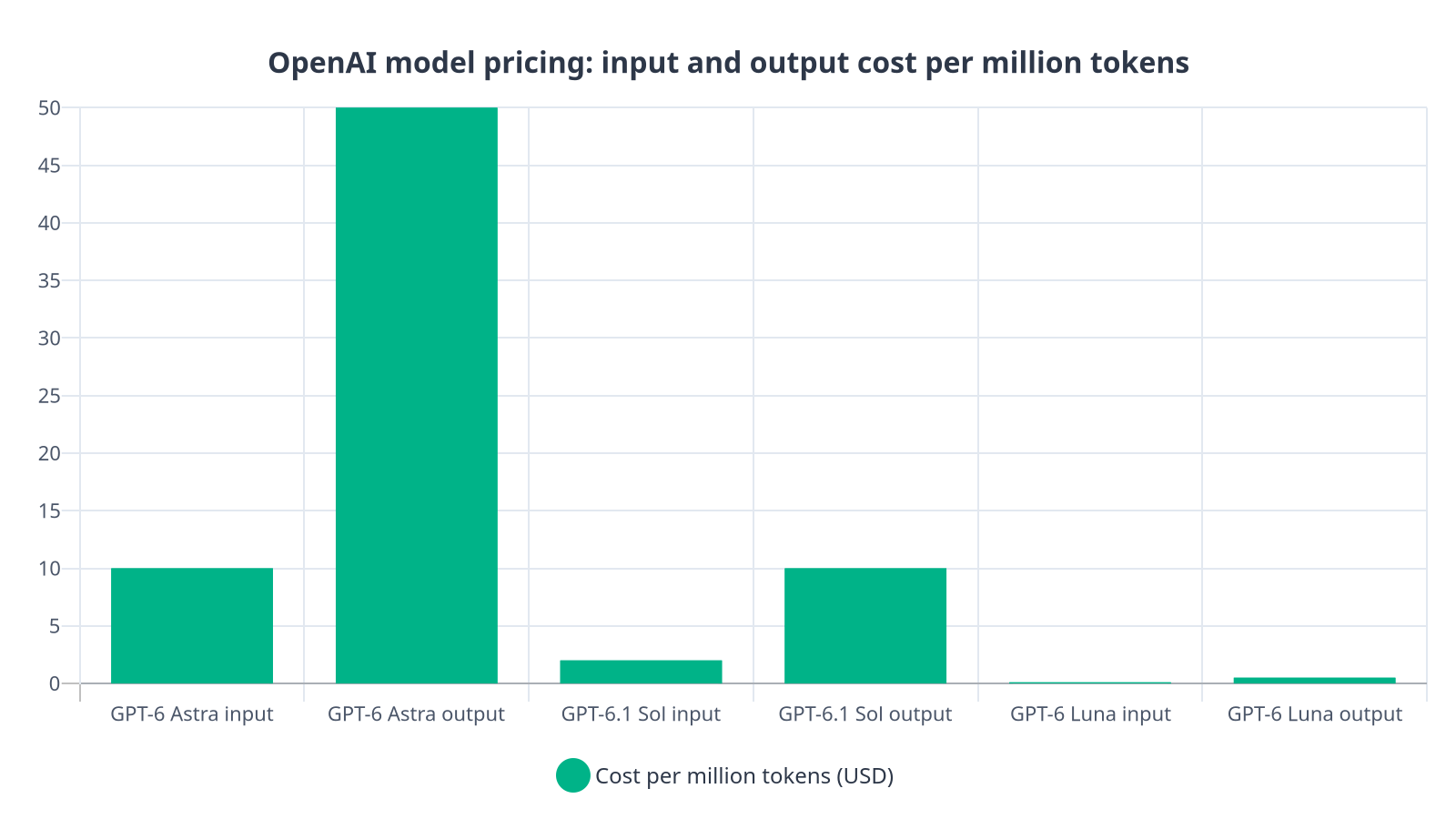
Source: OpenAI GPT-6.1 Sol launch post, September 29, 2026 (as reported by Improvado)
4. What enterprise marketing operations teams should do
Improvado recommends four checks. These are worth adapting for teams managing multi-platform marketing stacks.
Consider documenting every dataset an agent may read before enabling dots or any always-on agent. Name each source, assign an owner, and specify whether access is read-only or includes write permissions. This is especially important for teams with platform integrations spanning multiple marketing automation and CRM systems.
We recommend freezing naming conventions for channels, campaigns, and metric definitions into a single canonical version. Agents repeat whatever convention they find. If three systems use three different labels for the same campaign type, the agent will treat them as three separate things. A data normalization pass before agent enablement prevents compounding errors.
Consider keeping a human on any action that changes budget allocation or modifies live campaign parameters. Improvado's recommendation to "log what the agent did, so any number in a board deck traces back to source rows" is the minimum governance standard. Dashboard reporting should include an audit trail for agent-initiated changes.
We recommend running a controlled test with one real reporting task before expanding agent scope. Use actual campaign data, not sample sets. Compare cost, accuracy, and time against the manual process. The point is to surface where data gaps cause the agent to fail, not to confirm that the model is capable. As we noted in our assessment of read-only AI coworkers, the visibility gap between what an agent can see and what it should act on remains the defining operational risk.